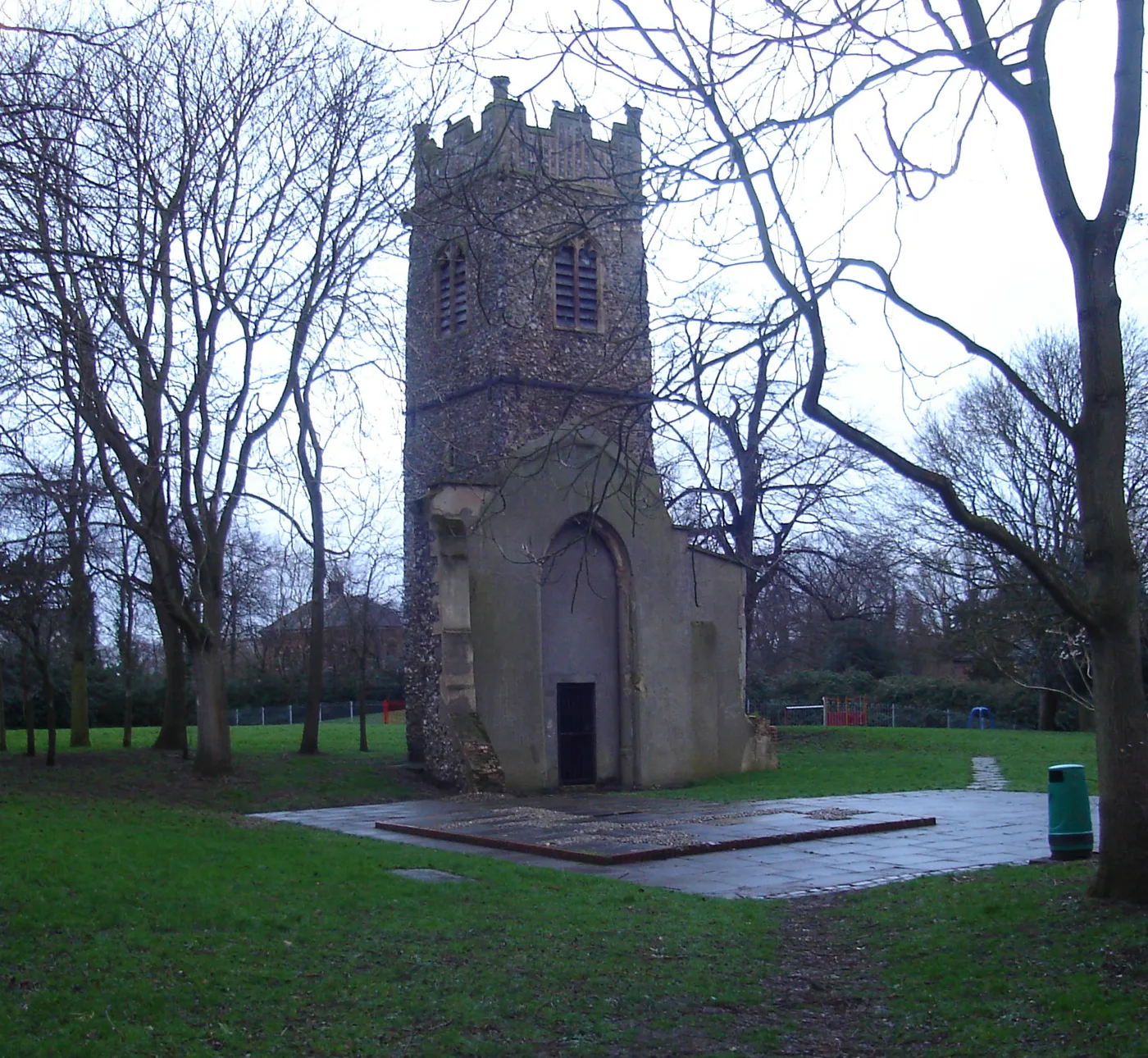

Repairs have begun at St Bartholomew's Tower in Heigham, with Grade I St Benedict's next. The £350,000 job ends in 2027 with new history boards at both.
Repairs have started on two medieval church towers in Norwich that survived the bombing of 1942 when the churches around them did not. Norwich City Council is spending £350,000 on St Bartholomew’s Tower in Heigham and St Benedict’s Tower off St Benedict’s Street.
The council announced the work on 12 October. It says the job will repair and conserve the flintwork and masonry, to stabilise both towers and keep them safe.
What is being done, and when
The council’s announcement sets out the plan:
- St Bartholomew’s first. Specialist repairs there have already begun.
- St Benedict’s next. Work moves on once St Bartholomew’s is finished.
- The contractor is Messenger, a specialist conservation firm.
- The money is a £350,000 investment across the two towers. The council has not said how it splits between them.
- The finish is due in 2027. New permanent interpretation boards will then go up at both towers, telling their history.
Councillor Josh Worley-Smith, cabinet member for business and social justice, said the towers “are an important part of the city’s story”. He said the boards “will help bring the history of these remarkable sites to life for residents and visitors alike.”
St Bartholomew’s Tower, Heigham
The tower stands in St Bartholomew’s Close, off Heigham Street. It is the remaining 15th century tower of a medieval parish church, according to the Norfolk Heritage Explorer. The rest of the church was destroyed by enemy bombing in 1942.
The church itself is much older than its tower. The county’s heritage record says it was in existence by 1175 to 1176. Joseph Hall, the Bishop of Norwich whose palace was nearby, was buried there in 1656, against his own wishes.
Historic England lists the tower at Grade II. Its listing describes:
- flint rubble walls with stone dressings and a flushwork parapet
- a two-light west window and four traceried sound holes
- four gargoyles below the battlements, with four pinnacles on top
- iron strapping on the tower
The site of the church is also a scheduled monument, which gives it a second layer of legal protection.
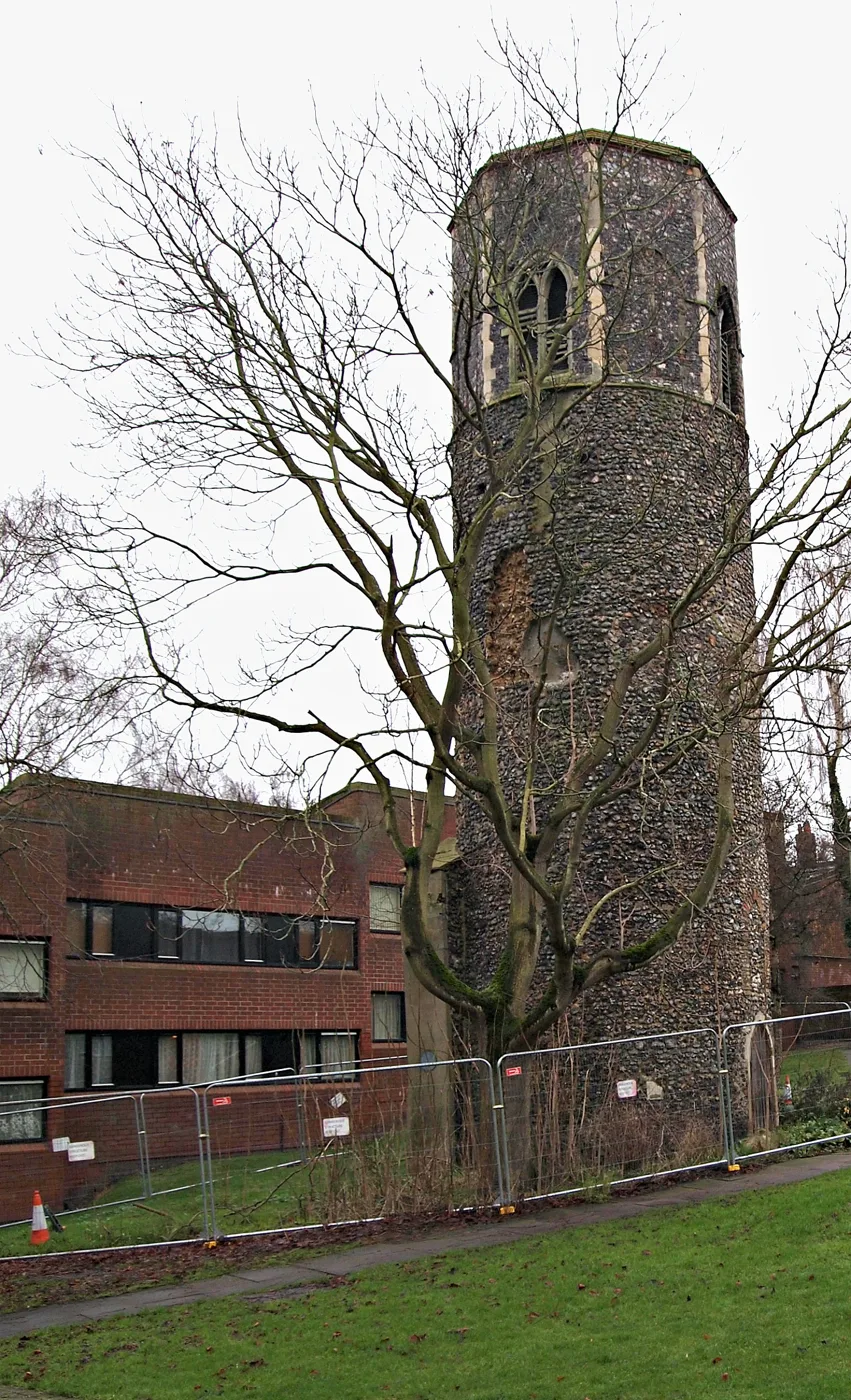
St Benedict’s Tower
St Benedict’s is a round flint tower, one of the round towers East Anglia is known for. It is the more important of the two: Historic England lists it at Grade I, the highest grade.
The tower stands among modern housing just south of St Benedict’s Street, close to the inner ring road. The Round Tower Churches Society says the nave and chancel were badly damaged by bombs in 1942 and later demolished, leaving only the tower.
Its age is not settled. The listing calls it 11th century. The society says excavations in the 1970s suggest it was built on flint and mortar foundations in about 1200, with the octagonal top added before 1400. The church’s font, from about 1380, survived the bombing and is now at Erpingham church in north Norfolk.
What it means for you
- Both towers stay where they are, as landmarks. The work is to stabilise them, not to change them.
- Expect contractors on site at St Bartholomew’s now, and at St Benedict’s later. The council has not published dates for each phase or said whether any paths nearby will close. We will add them if it does.
- The history boards come at the end, in 2027, so there is nothing new to read on site yet.
- St Benedict’s can be viewed at any time from outside, according to the Round Tower Churches Society.
For other building work in the city, see our Norwich planning news. For road closures this week, see Norwich roadworks and travel.
Have your say